
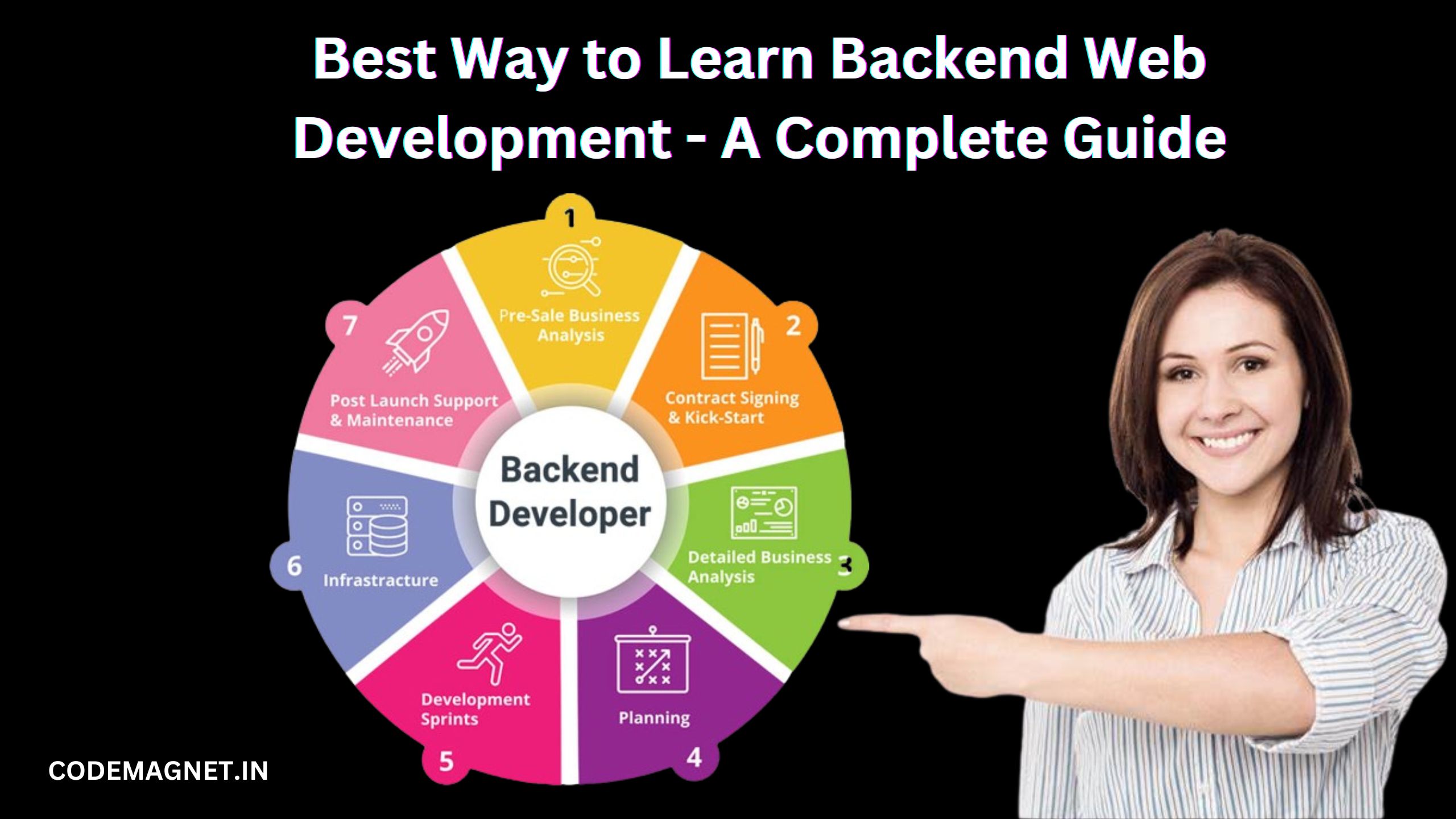
Backend development is like the engine of a website, handling tasks behind the scenes to make sure everything runs smoothly. When you visit a website, the backend is responsible for processing your request, fetching data from a database, and sending the right information back to your browser.
To get started with backend development follow these steps:
Setting up your development environment is the first step.
You’ll need to install the necessary tools and software, such as Node.js and npm for JavaScript, or Python and pip for Python.
Learning a Server-Side Language
Each language has its own strengths and weaknesses, so choose one that aligns with your goals and interests. Here are some popular server-side languages:
- Python: Known for its simplicity and readability, Python is a great choice for beginners. It has a large ecosystem of libraries and frameworks, such as Django and Flask, which make web development faster and easier.
- JavaScript (Node.js): With the rise of JavaScript, Node.js has become a popular choice for backend development. It allows you to use JavaScript on both the client and server sides, which can streamline your development process.
- Ruby: Ruby on Rails is a powerful web framework that makes it easy to build web applications. It emphasizes convention over configuration, which can speed up development time.
- Java: Java is a robust and widely used programming language for building enterprise-level applications. It has a strong community and a vast ecosystem of libraries and frameworks.
Frameworks and libraries are also important in backend development
These are pre-written pieces of code that help you build your website faster and more efficiently. For example, Django and Flask are popular Python frameworks, while Express.js is a popular framework for Node.js.

Working with Frameworks and Libraries
Frameworks and libraries can help you build web applications more efficiently. They provide pre-written code and tools that streamline common tasks. For example, Django and Flask are popular Python frameworks, while Express.js is a popular framework for Node.js.
Once you have a good understanding of backend development, you can start building your own web applications. You’ll need to write code that handles user requests, processes data, and interacts with the database.

Building and Deploying Web Applications
Once you have a good understanding of backend development, you can start building your own web applications. Deploying your application to a web server is the final step, and there are many services available, such as Heroku, AWS, and DigitalOcean, that make this process easy.
Use your chosen language, framework, and database to create the logic behind your application. After development, you’ll need to deploy your application to a web server. Services like Heroku, AWS, and DigitalOcean offer easy ways to deploy web applications.
Learning backend development can be an exciting journey, but it’s important to approach it with the right mindset and strategies to ensure success. Here are some do’s and don’ts to keep in mind:
Do’s:
- Start with the basics: Understand the fundamentals of programming and web development before diving into backend technologies.
- Learn a server-side language: Choose a language like Python, JavaScript (Node.js), Ruby, or Java, and master its syntax and concepts.
- Practice regularly: Build small projects and applications to apply what you’ve learned and improve your skills.
- Understand databases: Learn about different types of databases (SQL and NoSQL) and how to interact with them using your chosen language.
- Use frameworks and libraries: Utilize frameworks and libraries to streamline your development process and build more efficient applications.
- Version control: Learn how to use version control systems like Git to manage your code and collaborate with others.
- Stay updated: Keep up with the latest trends and technologies in backend development to stay relevant in the field.
Don’ts:
- Don’t rush: Take your time to understand concepts thoroughly before moving on to more complex topics.
- Don’t ignore security: Always prioritize security practices in your code to protect against vulnerabilities and attacks.
- Don’t skip testing: Testing is crucial in backend development to ensure your code works as expected and is free of bugs.
- Don’t forget about performance: Pay attention to performance optimization techniques to ensure your applications run smoothly and efficiently.
- Don’t hesitate to ask for help: If you’re stuck or unsure about something, don’t be afraid to seek help from forums, communities, or mentors.
- Don’t limit yourself: Explore different technologies and tools to broaden your skill set and become a well-rounded developer.
By following these do’s and don’ts, you can make the most of your backend development journey and become a successful developer.
Frontend vs Backend Development: A Layman’s Comparison
When you visit a website, you interact with its frontend and backend, but what do these terms mean? Let’s break it down in simple terms.
Frontend Development:
- What it does: Frontend development focuses on what users see and interact with on a website. It involves designing and building the user interface, layout, and overall look of the site.
- Skills needed: Knowledge of HTML, CSS, and JavaScript is essential. You also need to understand responsive design to ensure the site works well on different devices.
- Tools used: Text editors (e.g., VS Code), browsers, and frameworks/libraries like React, Angular, or Vue.js.
- Salary and job details: Entry-level frontend developers can earn around $50,000 to $70,000 per year. Job titles include Frontend Developer, UI/UX Designer, or Web Developer.
Backend Development:
- What it does: Backend development focuses on the server-side of websites. It involves managing the database, server, and application logic that powers the frontend.
- Skills needed: Proficiency in languages like Python, Java, PHP, or Node.js is required. Knowledge of databases (e.g., SQL, MongoDB) and server management is also important.
- Tools used: Integrated development environments (IDEs), databases, and frameworks like Django, Flask, Spring Boot, or Express.js.
- Salary and job details: Entry-level backend developers can earn around $60,000 to $80,000 per year. Job titles include Backend Developer, Server-side Developer, or Full Stack Developer.
Conclusion:
- Frontend: Focuses on the user interface and design.
- Backend: Manages the server, database, and application logic.
- Both are essential for building functional websites and apps.
In summary, frontend developers make websites look good and work well, while backend developers ensure everything runs smoothly behind the scenes. Both are crucial for creating a successful web presence.
Conclusion
Learning backend web development is an exciting journey that requires dedication and practice. By following the steps outlined in this article and continuously learning and experimenting, you can become a proficient backend developer. Remember to stay updated with the latest technologies and trends in the field to build modern and efficient web applications.




Leave a Reply