
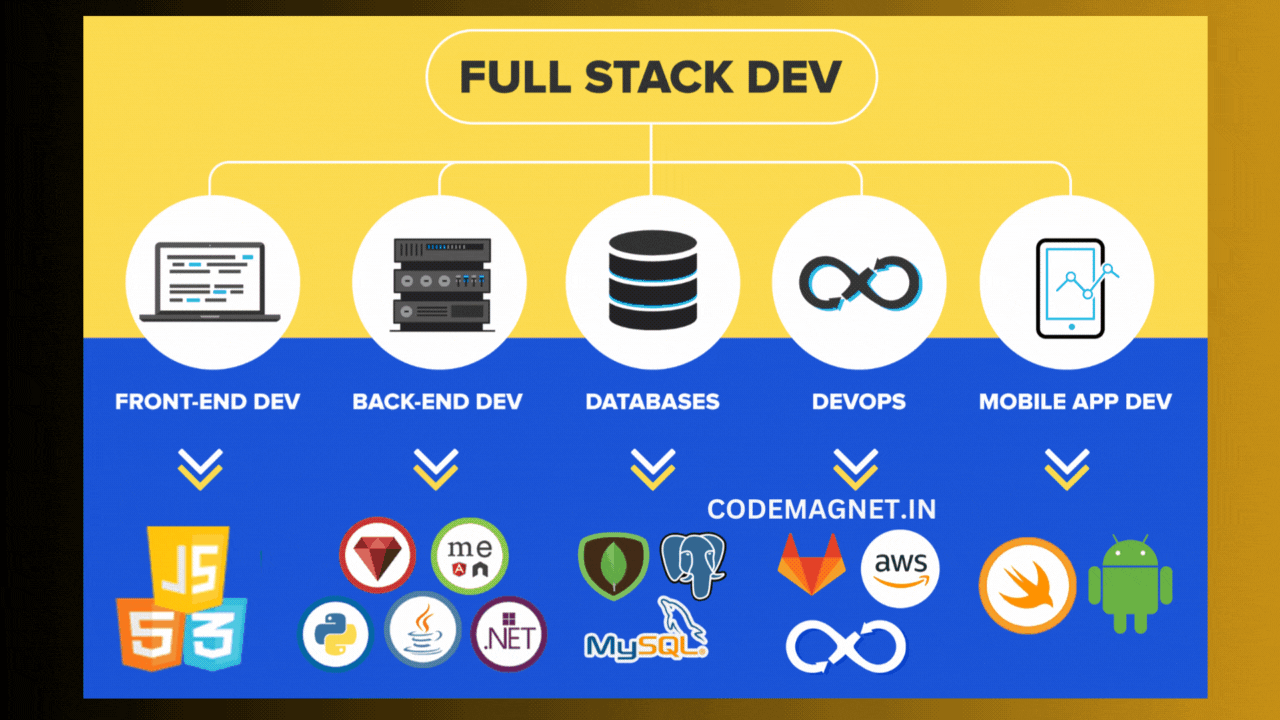
Full-stack developers are like Swiss Army knives in the world of web development. They’re skilled in working on both the front and back ends of websites, which means they can handle everything from writing code to designing user experiences and managing projects. This unique combination of skills has made full-stack developers highly sought after in various professional roles.
What is full-stack web development?
Full stack development involves working on both the front end (what users see) and the back end (the behind-the-scenes workings) of a website. This includes tasks like database work, building the user interface, and communicating with clients to plan and maintain projects.
How to become a full stack developer?
If you’re interested in becoming a full-stack developer, you can start by learning about front-end and back-end development. Front-end developers focus on the user interface and visual aspects of a site using languages like JavaScript, HTML, and CSS. Back-end developers work on the digital foundation of a site, such as databases and server-side scripting.

Understanding the Role of Full-Stack Developers
Full-stack developers combine front-end and back-end skills to tackle various tasks in building and maintaining digital projects. They need to be versatile, creative problem solvers with a strong technical background and excellent communication skills.
Let’s take an example to illustrate how a full-stack developer might work with both front-end and back-end technologies
# Front end: HTML, CSS, JavaScript
# Back end: Python, SQL

# HTML for the front end
html_code = '''
<!DOCTYPE html>
<html>
<head>
    <title>Sample Page</title>
    <link rel="stylesheet" type="text/css" href="styles.css">
</head>
<body>
    <h1>Welcome to our website!</h1>
    <p>This is a sample page.</p>
    <button onclick="fetchData()">Fetch Data</button>
    <div id="data"></div>
    <script src="script.js"></script>
</body>
</html>
'''

# CSS for styling
css_code = '''
body {
    font-family: Arial, sans-serif;
    background-color: #f0f0f0;
    padding: 20px;
}

h1 {
    color: #333;
}

p {
    color: #666;
}

button {
    padding: 5px 10px;
    background-color: #007bff;
    color: white;
    border: none;
    cursor: pointer;
}

button:hover {
    background-color: #0056b3;
}
'''

# JavaScript for interactive functionality
js_code = '''
function fetchData() {
    fetch('/api/data')
    .then(response => response.json())
    .then(data => {
        document.getElementById('data').innerHTML = JSON.stringify(data);
    });
}
'''

# Python for the back end
from flask import Flask, jsonify

app = Flask(__name__)

@app.route('/api/data')
def get_data():
    data = {'name': 'John Doe', 'age': 30, 'city': 'New York'}
    return jsonify(data)

if __name__ == '__main__':
    app.run(debug=True)
Here in the above example the full stack developer has created a simple web application using HTML, CSS, JavaScript for the front end, and Python with Flask for the back end. The front end displays a welcome message and a button to fetch data from the back end. When the button is clicked, a request is made to the back end, which responds with some sample data that is then displayed on the web page.
Job Responsibilities of Full Stack Developers
Full-stack developers are responsible for testing changes to programs, managing the full life cycle of software, upgrading and fine-tuning applications, and providing feedback to site managers. They also oversee front-end architecture, back-end programming, and cross-platform optimization.

Skills and Languages for Full Stack Developers
Important skills and languages for full-stack developers include Python, JavaScript, HTML, CSS, SQL, Rust, and Java. They also need to understand web architecture, think critically, be patient, and communicate effectively.
What are some popular full-stack developer tools?
- Visual Studio Code (VS Code):
- VS Code is a highly favored code editor among full-stack developers. Its lightweight yet powerful nature makes it the go-to coding tool for many.
- Features include intelligent code completion, debugging, Git integration, and a rich extension marketplace1.

- Git:
- Git is essential for version control. It allows you to track changes, collaborate with other developers, and manage your codebase effectively.
- Platforms like GitHub, GitLab, and Bitbucket provide hosting services for Git repositories.

- Docker:
- Docker simplifies application deployment by creating lightweight, isolated containers. It ensures consistency across different environments and makes scaling easier.
- Node.js:
- Node.js enables server-side JavaScript development. It’s efficient for building APIs, handling requests, and managing data.
- Popular frameworks like Express.js are built on Node.js.

- React:
- React is a powerful frontend library for building dynamic user interfaces. It follows a component-based architecture and is widely used in single-page applications.

- Angular:
- Angular is another frontend framework that provides a comprehensive ecosystem for building complex web applications.
- It includes features like dependency injection, routing, and state management.

- Amazon Web Services (AWS):
- AWS offers cloud services for hosting, storage, databases, and more. Familiarity with AWS can enhance your full-stack development capabilities.

- PostgreSQL:
- PostgreSQL is a robust open-source relational database management system. It’s known for its performance, scalability, and support for advanced features.

- Webpack:
- Webpack is a powerful bundler that optimizes and bundles your frontend assets (JavaScript, CSS, etc.) for production.
- It handles dependencies, code splitting, and minification.

- Jenkins:
- Jenkins is an automation server that facilitates continuous integration and continuous delivery (CI/CD) pipelines.
- It automates building, testing, and deploying code.
Options for Learning Full-Stack Development
You can learn full-stack development through coding boot camps, college degrees, or self-taught methods. Bootcamps offer intensive, practical instruction, while degrees provide a more comprehensive education. Self-taught options allow for a personalized learning experience.
Career Options for Full Stack Developers
Full stack developers can pursue various career paths, such as computer and information systems manager, software developer, information security analyst, computer support specialist, or graphic designer. These roles offer competitive salaries and growth opportunities in the technology industry.
Job Market and Salaries
The web development industry is expected to grow, offering numerous job opportunities for full-stack developers. Salaries vary based on skills, experience, and location, with New York being a particularly strong market for web developers.
In Conclusion
Full-stack development is a challenging yet rewarding career path that requires a diverse set of skills. By learning front and back-end development, you can become a versatile developer capable of handling various tasks in the digital world. Whether you choose a boot camp, degree, or self-taught route, there are plenty of opportunities to pursue a career in full-stack development.
Interested in pursuing a career as a full stack developer which is the most demanding job role?



Leave a Reply